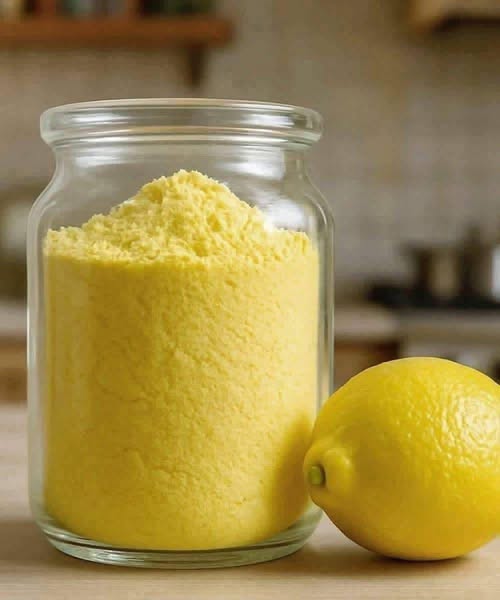
Homemade Lemon Powder
Description
Homemade Lemon Powder is a simple, concentrated citrus ingredient made by drying lemon peels and grinding them into a fine powder. It has a bright lemon aroma and can be used in tea, desserts, marinades, spice blends, salad dressings, baking, and homemade beauty preparations.
Ingredients
- 6–8 fresh lemons
- Optional: 1 teaspoon sugar for sweet recipes
Equipment
- Vegetable peeler or fine grater
- Baking tray
- Oven or food dehydrator
- Spice grinder/blender
- Fine sieve
- Clean, completely dry airtight jar
Method
1. Wash the lemons
Wash and scrub the lemons thoroughly. Dry them completely.
2. Peel the lemons
Use a vegetable peeler to remove only the yellow outer layer. Try to avoid the white pith underneath because it can make the powder quite bitter.
3. Dry the peels
Spread the peels in a single layer on a baking tray.
- Oven: Dry at about 80–90°C (175–195°F) for 1–3 hours, turning occasionally, until completely crisp.
- Dehydrator: Dry at about 55–60°C (130–140°F) until crisp.
- Air-drying: Place the peels somewhere clean, dry, and well-ventilated until completely brittle. This can take several days.
The peels must be fully dry and crisp before grinding.
4. Grind
Allow the dried peels to cool completely. Grind them in a clean spice grinder or blender until they become a fine powder.
5. Sift
Pass the powder through a fine sieve. Grind any larger pieces again.
6. Store
Transfer the powder to a dry, airtight glass jar. Store it in a cool, dark, dry place.
Servings
Approximately ½ cup lemon powder, depending on the size and thickness of the lemon peels.
Nutritional Information
Nutrition varies considerably depending on the amount used and whether any white pith is included. Because this recipe uses lemon peel rather than lemon juice, the powder is used in small quantities.
Approximate per 1 teaspoon:
- Calories: ~2–5 kcal
- Carbohydrates: ~1 g
- Fiber: small amount
- Fat: negligible
- Protein: negligible
Benefits
Lemon peel naturally contains vitamin C, plant compounds, and aromatic citrus oils. Using lemon powder can also provide a convenient way to add lemon flavor without keeping fresh lemons on hand.
However, lemon powder should be considered primarily a flavoring ingredient, not a treatment or substitute for a balanced diet.
Recipe Notes
- Use fresh, firm lemons with fragrant skins.
- If possible, choose lemons with clean, edible-quality peels.
- Removing excess white pith gives a smoother, less bitter powder.
- Make sure the peels are completely dry before grinding or storing.
- Moisture is the biggest enemy of homemade citrus powder because it can cause clumping or spoilage.
- For a stronger lemon flavor, use a fine powder rather than coarse flakes.
Tips & Tricks
- For baking: Add ½–1 teaspoon to cakes, cookies, muffins, or icing.
- For tea: Mix a small pinch into hot tea with honey.
- For savory dishes: Add it to marinades, roasted vegetables, rice, chicken, or fish.
- For seasoning: Combine with salt, black pepper, garlic powder, and herbs.
- For desserts: Mix with sugar to make homemade lemon-flavored sugar.
- For a brighter color: Use only the yellow zest and avoid the white pith.
- For longer storage: Keep the jar tightly sealed and always use a completely dry spoon.
Storage
Store in an airtight container away from heat, sunlight, and moisture. For best flavor, use within several months. If you notice moisture, mold, an unusual smell, or significant discoloration, discard the powder.
Frequently Asked Questions
Q: Can I make lemon powder from whole lemons?
Yes, but the easiest version is made from the peel/zest. The white pith and dried pulp can make the powder more bitter.
Q: Can I use lemon juice to make lemon powder at home?
You can dehydrate lemon juice into a brittle sheet and grind it, but it is more prone to absorbing moisture. Dried lemon peel is much simpler for home preparation.
Q: Why is my lemon powder bitter?
The most common reason is too much white pith. Scrape or peel away as much of it as possible before drying.
Q: How much lemon powder equals fresh lemon zest?
As a starting point, use about ½ teaspoon of homemade lemon powder for 1 teaspoon of fresh zest, then adjust according to taste because the strength varies.
Q: Can I use Meyer lemons?
Yes. Meyer lemons can produce a particularly fragrant and slightly sweeter powder.
Q: Can lemon powder replace lemon juice?
Not completely. Lemon powder made from peel provides concentrated lemon aroma and flavor but does not provide the same acidity or liquid that lemon juice does.
Q: Can I add it directly to water?
Yes, but peel powder may not dissolve completely. Stir well or strain the drink if you prefer a smoother texture.
Q: How do I prevent the powder from becoming lumpy?
Dry the peels thoroughly, cool them before grinding, and store the finished powder in a completely dry airtight container.