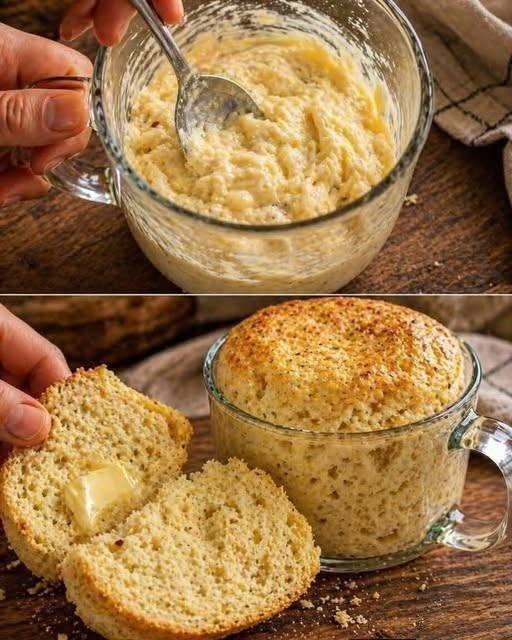
If you miss bread but are avoiding wheat flour and sugar, this 90-second mug bread is one of the easiest recipes to keep in your back pocket. It is made in a microwave, requires no yeast or rising time, and comes together in a single mug.
One important note: despite the popular “zero-carb bread” label, this recipe is not literally zero carbohydrate because almond flour contains some naturally occurring carbohydrate. It is better described as very low-carb. A version using almond flour, egg, and baking powder is well established as a quick microwave bread substitute.
Recipe Name
90-Second 3-Ingredient Low-Carb Mug Bread
Why You’ll Love This Recipe
Ready in about 90 seconds
No yeast
No wheat flour
No sugar
Only 3 basic ingredients
Made in one microwave-safe mug or ramekin
Naturally gluten-free when using certified gluten-free ingredients
Soft enough for sandwiches and breakfast toast
Excellent for busy mornings
Can be sliced and toasted for a firmer, more bread-like texture
The basic technique is simple: combine almond flour, baking powder, and egg, transfer the batter to a microwave-safe vessel, and microwave until set. Similar 90-second recipes use a combination of almond flour, egg, and baking powder, sometimes with butter or oil added for a richer, softer crumb.
Ingredients
For 1 serving
3 tablespoons almond flour
1 large egg
½ teaspoon baking powder
That’s it!
Optional additions
These aren’t necessary for the three-ingredient version, but you can add them if you want to change the flavour or texture:
Small pinch of salt
1 tablespoon melted butter or coconut oil for a richer, softer crumb
Garlic powder and Italian herbs for savory bread
Cinnamon for a breakfast-style version
A little shredded cheese for cheesy mug bread
Many established versions add butter or oil because the extra fat can make the bread softer and richer. Eating
Equipment
1 microwave-safe mug or ramekin
Small fork or whisk
Spoon or spatula
Microwave
Knife for slicing
A wide, relatively shallow mug or ramekin generally works better than a very narrow, deep cup because the mixture cooks more evenly and produces slices that resemble small English-muffin rounds.
How to Make 90-Second Mug Bread
Step 1: Prepare the mug
Lightly grease the inside of a microwave-safe mug or ramekin if you want the bread to release easily.
If you’re using butter or oil as an optional ingredient, you can use a little of it to grease the container.
Step 2: Mix the dry ingredients
Add the 3 tablespoons almond flour and ½ teaspoon baking powder to the mug.
Stir thoroughly with a fork.
This step matters because baking powder needs to be distributed evenly throughout the almond flour. You don’t want a pocket of baking powder in one area of the bread. A similar published recipe specifically recommends mixing the dry ingredients well before adding the wet ingredients.
Step 3: Add the egg
Crack 1 large egg into the mug.
Beat the egg into the almond flour mixture until you have a smooth, evenly mixed batter.
Scrape around the bottom and sides of the mug to make sure there are no dry pockets of almond flour.
If you’re adding optional melted butter or oil, stir it in now.
Step 4: Smooth the batter
Use the back of your spoon to level the surface.
Don’t fill the mug more than halfway to two-thirds full because the bread will expand as it cooks.
Step 5: Microwave
Place the mug in the microwave.
Cook on HIGH for approximately 90 seconds.
The exact time can vary according to microwave wattage and the shape of your container, so the first time you make it, watch the texture carefully.
The bread should look set and spring back slightly when gently touched.
Step 6: Let it cool
Carefully remove the mug because it may be very hot.
Allow the bread to rest for 1–2 minutes.
This short cooling period helps the crumb firm up and makes it easier to remove from the mug. Published versions of 90-second almond-flour bread similarly recommend cooling before removing and slicing.
Step 7: Remove and slice
Run a butter knife around the edge if necessary.
Turn the mug upside down onto a plate.
Slice the bread horizontally into two pieces.
For the best texture, place the slices in a toaster or dry skillet for a couple of minutes until lightly golden.
The Best Way to Eat It
Fresh from the microwave, the bread is soft and slightly cake-like. Toasting it transforms the texture and gives the outside a pleasant crispness.
Try it with:
Butter
Cream cheese
Avocado
Fried or scrambled eggs
Cheese
Tuna salad
Chicken salad
Turkey or other sandwich fillings
Peanut or almond butter
Sugar-free jam
Smoked salmon
Bacon and eggs
For breakfast, slice it in half, toast it, and top with a fried egg and cheese.
For lunch, use the two halves as a small sandwich bun.
You can also cut the bread into cubes and toast them in a skillet to make quick low-carb croutons.
Recipe Notes
1. Don’t expect conventional wheat bread
This is a bread substitute, not a traditional yeast loaf.
Wheat bread develops an elastic gluten structure, while almond flour doesn’t. Therefore, this mug bread is naturally more tender and crumbly.
Toasting it usually improves the texture considerably.
2. Almond flour matters
Use fine almond flour rather than coarse almond meal when possible.
Fine almond flour produces a more delicate and uniform crumb.
3. Don’t overcook it
Microwaving too long can make the bread rubbery or dry.
Start with 90 seconds. If the centre is still visibly wet, continue in short increments—about 10–15 seconds at a time—until set.
4. Mix thoroughly
Uneven mixing can cause areas of concentrated baking powder or dry almond flour.
Whisk the egg well into the dry ingredients before cooking.
5. Use a suitable mug
A very narrow mug can produce a tall piece of bread that’s difficult to slice.
A wide mug, ramekin, or small microwave-safe glass container creates a more useful shape.
6. Toast it
If you only try one improvement, toast the finished bread.
After cooling, slice it in half and toast both sides until lightly golden. This helps reduce the soft, eggy texture that some people notice in microwave mug bread.
7. Add fat for a richer version
If you don’t mind going beyond the strict three-ingredient version, add about 1 tablespoon melted butter or coconut oil.
Several established versions use butter or oil along with almond flour, egg, and baking powder.
Nutritional Information
Because brands and ingredient sizes vary, the following is an approximate estimate for the three-ingredient version made with 3 tablespoons almond flour, one large egg, and ½ teaspoon baking powder.
Approximate nutrition per recipe
Calories: 170–180
Protein: 8–9 g
Total carbohydrates: approximately 5 g
Dietary fiber: approximately 2–3 g
Net carbohydrates: approximately 2–3 g
Fat: approximately 12–14 g
Sugar: approximately 1 g
The exact nutritional numbers will depend on your almond flour and egg. For comparison, a published 90-second almond-flour bread recipe reports about 2 g total carbohydrate and 1 g fibre per 27 g slice, while other versions containing added butter report higher calories and fat.
Important: “zero carb” is therefore a misleading name for this recipe. If you’re strictly tracking carbohydrates, count the carbohydrates listed on the labels of your specific ingredients.
Benefits of This Mug Bread
Quick and convenient
The biggest benefit is speed. Traditional bread requires mixing, proofing, shaping, and baking. This recipe tak
Low in carbohydrates
Almond flour generally provides substantially fewer digestible carbohydrates per serving than conventional wheat flour, making it popular in low-carb and keto-style recipes.
Provides protein
The egg contributes protein and also helps bind the ingredients together.
No added sugar
There is no sugar in the basic recipe.
No yeast
You don’t need to wait for dough to rise. Baking powder provides the leavening.
Gluten-free
The recipe contains no wheat flour. If you need to avoid gluten for medical reasons, choose almond flour and baking powder that are appropriately labelled/certified gluten-free to reduce the risk of cross-contact.
Portion controlled
Instead of baking an entire loaf, you make one small serving whenever you need it.
Frequently Asked Questions
Q: Is this bread really zero-carb?
A: No. It is more accurate to call it low-carb or very low-carb. Almond flour contains carbohydrates, although much of its carbohydrate comes from fibre. The exact net-carb amount depends on the brand and serving size.
Q: Can I make it without almond flour?
Yes, but substitutions aren’t always one-to-one.
Some recipes use coconut flour instead, but coconut flour absorbs liquid very differently from almond flour. If substituting coconut flour, use a recipe specifically formulated for coconut flour rather than simply replacing the almond flour in equal volume. A published 90-second keto bread recipe also notes coconut flour as an alternative, but the proportions need consideration.
Q: Why is my mug bread rubbery?
The most common reason is overcooking.
Microwaves cook rapidly, and an extra 30–60 seconds can make a small bread much firmer and chewier.
Try cooking for 90 seconds first, then adding only 10–15 seconds if necessary.
Q: Why does my bread taste eggy?
Because an egg is a significant part of this small recipe.
To reduce the eggy impression, use a wide container, don’t overcook it, and toast the finished bread. Adding savoury seasonings or cheese can also make the egg flavour less noticeable.
Q: Can I make it dairy-free?
Yes. The strict three-ingredient version is already dairy-free if your baking powder and almond flour are dairy-free. If you add butter, replace it with a suitable plant-based fat or oil.
Q: Can I make it in an oven?
Yes, although the great advantage of this recipe is its microwave speed. If using an oven, transfer the batter to a small oven-safe ramekin and bake until completely set. The exact time depends heavily on the container and oven, so don’t use the microwave cooking time as an oven temperature/time conversion.
Q: Can I toast the bread?
Absolutely—and I recommend it.
Slice the cooked bread horizontally and toast it until golden. This creates a firmer exterior and makes it more suitable for sandwiches.
Q: Can I add seasonings?
Definitely. Try garlic powder, dried oregano, rosemary, thyme, black pepper, chilli flakes, or Italian seasoning.
For a cheesy version, add a small amount of shredded cheese before microwaving.
Q: Can I make a sweet version?
Yes. Add cinnamon and an appropriate sugar-free sweetener. You can also serve it with nut butter.
Q: Why did my bread overflow?
Your mug may be too small, or you may have filled it too high.
Use a larger microwave-safe mug or shallow ramekin and leave plenty of room for expansion.
Q: Can I make several servings at once?
You can, but the beauty of mug bread is that it is portion-controlled and quick. If making multiple servings, it’s better to prepare them individually unless you have a tested larger-batch recipe, because microwave cooking becomes less predictable as the quantity and container size change.
Final Recipe Card
90-Second 3-Ingredient Low-Carb Mug Bread
Servings: 1
Prep time: 2–3 minutes
Cook time: 90 seconds
Total time: About 4–5 minutes
Ingredients
3 tablespoons fine almond flour
1 large egg
½ teaspoon baking powder
Directions
Lightly grease a microwave-safe mug or ramekin.
Mix almond flour and baking powder thoroughly.
Add the egg and stir until completely smooth.
Level the batter.
Microwave on HIGH for approximately 90 seconds.
Carefully remove and cool for 1–2 minutes.
Release from the mug and slice horizontally.
Toast if desired.
Serve with your favourite low-carb toppings.
Best tip: For a more bread-like result, don’t stop at the microwave. Cool, slice, and toast it. That’s the step that takes this quick mug recipe from a soft microwave cake-like texture to something much more useful for sandwiches and breakfast toast.
And remember: this is low-carb, not literally zero-carb. If you’re following a medically prescribed diet or need very precise carbohydrate counts, calculate the nutrition from the exact brands and quantities you use.