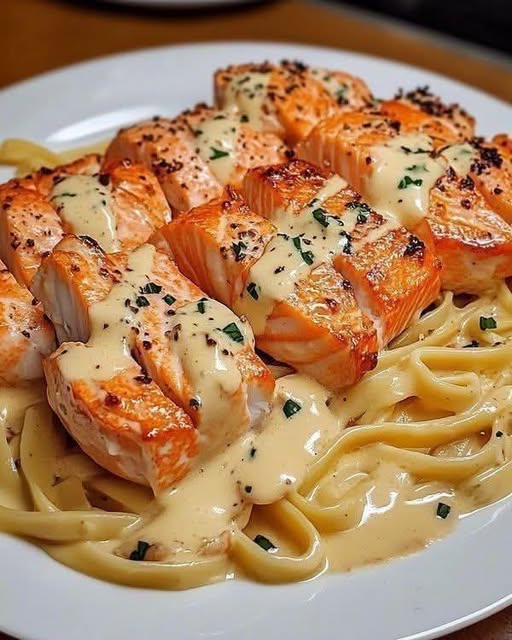
Creamy Garlic Butter Salmon with Fettuccine
Description
Creamy Garlic Butter Salmon with Fettuccine is a rich, comforting pasta dish featuring tender, flaky salmon coated in a silky garlic-butter cream sauce. The sauce is tossed with perfectly cooked fettuccine and finished with Parmesan, creating a restaurant-style meal that’s surprisingly easy to make at home.
The combination of buttery salmon, fragrant garlic, creamy sauce, Parmesan, and fresh herbs makes this a satisfying dinner for both busy weeknights and special occasions.
Recipe at a Glance
- Prep Time: 15 minutes
- Cook Time: 25 minutes
- Total Time: 40 minutes
- Servings: 4
- Cuisine: Italian-inspired
- Course: Main Course
- Difficulty: Easy to Moderate
Ingredients
For the Salmon
- 4 salmon fillets, about 5–6 oz (140–170 g) each
- 1 tablespoon olive oil
- 2 tablespoons unsalted butter
- 5 cloves garlic, minced
- 1 teaspoon Italian seasoning
- ½ teaspoon paprika
- ½ teaspoon salt, or to taste
- ¼ teaspoon freshly ground black pepper
- 1 tablespoon fresh lemon juice
For the Creamy Garlic Butter Sauce
- 2 tablespoons unsalted butter
- 4 cloves garlic, minced
- 1 cup heavy cream
- ¾ cup freshly grated Parmesan cheese
- ½ cup chicken or vegetable broth
- ½ teaspoon Italian seasoning
- ¼ teaspoon red pepper flakes, optional
- Salt, to taste
- Black pepper, to taste
- 2 tablespoons chopped fresh parsley
For the Pasta
- 12 oz (340 g) fettuccine
- Salt, for the pasta water
- ½ cup reserved pasta water, as needed
Optional Garnishes
- Extra Parmesan cheese
- Fresh parsley
- Lemon wedges
- A little freshly cracked black pepper
- Red pepper flakes
Instructions
1. Cook the Fettuccine
Bring a large pot of generously salted water to a boil. Cook the fettuccine according to the package directions until al dente.
Before draining, reserve about ½ cup of the pasta water. Drain the pasta and set aside.
2. Season the Salmon
Pat the salmon fillets dry with paper towels.
Season both sides with salt, black pepper, paprika, and Italian seasoning.
3. Sear the Salmon
Heat the olive oil and 2 tablespoons of butter in a large skillet over medium-high heat.
Place the salmon in the skillet and cook for about 3–4 minutes per side, depending on thickness, until golden on the outside and cooked through.
Remove the salmon from the skillet and set aside.
4. Make the Garlic Butter Base
Reduce the heat to medium. Add 2 tablespoons of butter to the same skillet.
Add the minced garlic and sauté for about 30–60 seconds, stirring frequently, until fragrant. Do not let the garlic burn.
5. Make the Cream Sauce
Pour in the broth and scrape up any flavorful browned bits from the bottom of the skillet.
Add the heavy cream and Italian seasoning. Stir and let the sauce gently simmer for 2–3 minutes.
Reduce the heat to low and gradually stir in the Parmesan cheese until melted and smooth.
Add red pepper flakes, if using. Taste and adjust the salt and black pepper.
6. Add the Pasta
Add the cooked fettuccine directly to the creamy sauce.
Toss gently until the pasta is evenly coated. If the sauce is too thick, add reserved pasta water a tablespoon or two at a time until you reach your preferred consistency.
7. Finish the Salmon
Return the salmon fillets to the skillet, placing them over or alongside the pasta.
Spoon some of the creamy garlic butter sauce over the salmon. Add the fresh lemon juice and chopped parsley.
Allow everything to warm together for about 1–2 minutes.
8. Serve
Divide the creamy fettuccine among four plates.
Top each serving with a salmon fillet and extra Parmesan and parsley. Serve immediately with lemon wedges if desired.
Recipe Notes
- Salmon: Skin-on or skinless salmon can be used. If using skin-on fillets, sear the skin side first for a crispier finish.
- Parmesan: Freshly grated Parmesan melts more smoothly than pre-shredded cheese.
- Sauce consistency: The sauce thickens as it cools, so keep some pasta water available to loosen it.
- Garlic: Fresh garlic provides the best flavor for this recipe.
- Lemon: A small amount of lemon juice balances the richness of the cream and butter.
- Pasta: Fettuccine works especially well because its wide shape holds the creamy sauce.
- Storage: Refrigerate leftovers in an airtight container for up to 3 days.
- Reheating: Reheat gently over low heat with a splash of milk, cream, broth, or water to loosen the sauce.
Helpful Tips
- Don’t overcook the salmon. Salmon can become dry if cooked too long. Cook just until it flakes easily with a fork.
- Use medium heat for the garlic. Burnt garlic can make the entire sauce bitter.
- Keep the sauce at a gentle simmer. Avoid vigorously boiling the cream.
- Add Parmesan off or on very low heat. This helps prevent the cheese from becoming grainy.
- Save pasta water. The starchy water is excellent for adjusting the sauce and helping it cling to the pasta.
- Use freshly grated Parmesan. It creates a smoother, richer sauce.
- Taste before serving. Parmesan and broth can already contain salt, so adjust seasoning gradually.
- Serve immediately. Cream sauces become thicker as they sit.
Serving Suggestions
Serve this pasta with:
- Garlic bread
- A simple green salad
- Steamed broccoli
- Roasted asparagus
- Sautéed spinach
- Roasted cherry tomatoes
For an elegant dinner, garnish with fresh parsley, Parmesan, cracked black pepper, and a squeeze of lemon.
Nutritional Information
Approximate nutrition per serving:
- Calories: 820 kcal
- Protein: 43 g
- Carbohydrates: 58 g
- Fat: 48 g
- Saturated Fat: 24 g
- Fiber: 3 g
- Sugar: 4 g
- Cholesterol: 170 mg
- Sodium: 720 mg
Nutrition values are estimates and can vary depending on the brands, ingredients, portion sizes, and preparation methods used.
Benefits
1. High-Quality Protein
Salmon provides a substantial amount of protein, which supports muscle maintenance and helps make the meal satisfying.
2. Source of Omega-3 Fatty Acids
Salmon naturally provides EPA and DHA omega-3 fatty acids, important components of a balanced diet.
3. Provides Essential Nutrients
Salmon can contribute nutrients such as vitamin D and vitamin B12, while Parmesan provides calcium and protein.
4. Satisfying Meal
The combination of protein, carbohydrates, and fat makes this a filling main course that can work well as a complete dinner.
5. Garlic Flavor Without Heavy Seasoning
Fresh garlic, herbs, black pepper, and lemon provide plenty of flavor without requiring a large amount of additional seasoning.
These are general nutritional benefits of the ingredients and are not intended as medical advice.
Recipe Q&A
Can I use frozen salmon?
Yes. Thaw the salmon completely and pat it dry before seasoning and cooking.
Can I use another type of pasta?
Absolutely. Linguine, spaghetti, tagliatelle, or penne can all work. Fettuccine is recommended because its broad shape pairs particularly well with the creamy sauce.
Can I substitute the heavy cream?
You can use half-and-half for a lighter sauce, although the finished sauce will be less rich and may be slightly thinner.
Can I make this without Parmesan?
Yes. The sauce will still be creamy, but Parmesan adds saltiness, flavor, and body. Pecorino Romano can be used as an alternative.
Can I add vegetables?
Yes. Spinach, broccoli, asparagus, mushrooms, peas, or sun-dried tomatoes are excellent additions.
How do I prevent the sauce from becoming too thick?
Add reserved pasta water gradually while tossing the pasta. You can also add a small splash of milk, cream, or broth when reheating.
Can I prepare this recipe ahead of time?
It is best served fresh, but you can prepare the salmon and sauce separately ahead of time and combine them with freshly cooked pasta when ready to serve.
How long do leftovers last?
Store leftovers in the refrigerator for up to 3 days in an airtight container.
Can I freeze creamy salmon pasta?
Freezing is not recommended for the best texture because cream-based sauces can separate when thawed and reheated.
How do I know when the salmon is done?
The salmon should flake easily with a fork and be opaque through the center. For the most reliable result, use an instant-read thermometer and cook salmon to your preferred safe doneness.
Can I make this recipe spicy?
Yes. Add red pepper flakes to the sauce, or use a small amount of cayenne pepper for extra heat.
Chef’s Tip
For the best restaurant-style result, don’t let the pasta sit after draining. Add it directly to the sauce while it’s hot and toss thoroughly. The pasta’s starch, combined with the creamy garlic butter sauce, helps create a silky coating that clings beautifully to every strand.
Final Serving Idea
Finish each plate with a warm salmon fillet, a generous twist of creamy fettuccine, freshly grated Parmesan, chopped parsley, cracked black pepper, and a small squeeze of lemon.