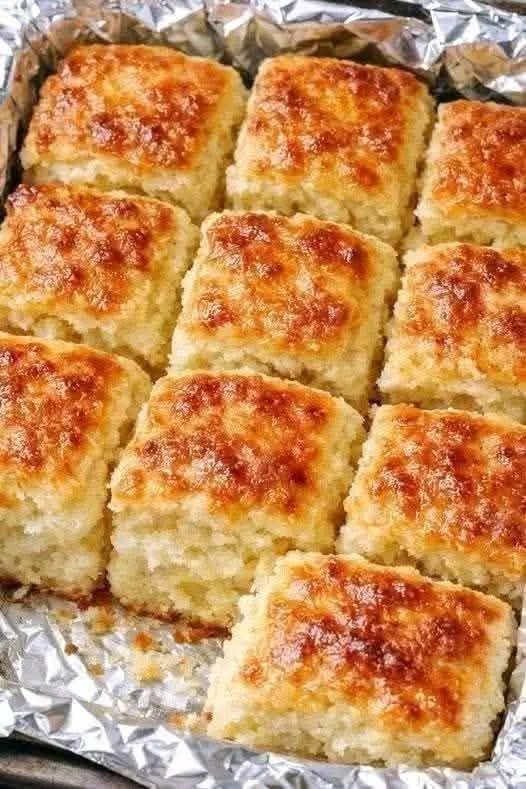
Southern-Style Buttermilk Biscuits
Description
Southern-style buttermilk biscuits are tender, flaky, buttery, and lightly crisp on the outside. Cold butter and tangy buttermilk create the classic soft layers, while gentle handling keeps the biscuits from becoming tough. They are delicious for breakfast, alongside fried chicken, or served with gravy, honey, or jam.
Prep Time: 15 minutes
Chill/Rest Time: 10 minutes
Bake Time: 12–15 minutes
Total Time: About 40 minutes
Servings: 8 biscuits
Ingredients
- 2 cups (250 g) all-purpose flour
- 1 tablespoon baking powder
- ½ teaspoon baking soda
- 1 teaspoon salt
- 1 teaspoon sugar, optional
- ½ cup (113 g) cold unsalted butter, cubed
- ¾ cup (180 ml) cold buttermilk, plus 1–2 tablespoons if needed
- 1 tablespoon melted butter, for brushing
Instructions
1. Prepare the oven
Preheat the oven to 450°F (230°C). Line a baking sheet with parchment paper or lightly grease it.
2. Mix the dry ingredients
In a large bowl, whisk together the flour, baking powder, baking soda, salt, and optional sugar.
3. Cut in the butter
Add the cold cubed butter. Use a pastry cutter or your fingertips to work the butter into the flour until you have a mixture containing pea-sized pieces of butter.
Don’t completely blend the butter into the flour—the small pieces help create flaky layers.
4. Add the buttermilk
Pour in ¾ cup cold buttermilk. Stir gently with a fork or spatula just until the dough comes together.
If the dough looks very dry, add buttermilk 1 tablespoon at a time. The dough should be soft and slightly sticky.
5. Fold the dough
Turn the dough onto a lightly floured surface. Gently pat it into a rectangle about ¾-inch thick.
Fold the dough in half, then gently pat it out again. Repeat 2–3 times. This creates the biscuits’ characteristic layers.
6. Cut the biscuits
Pat the dough to approximately ¾–1 inch thick. Cut out biscuits using a 2½-inch round cutter.
Press the cutter straight down and straight back up rather than twisting it. Twisting can seal the edges and prevent the biscuits from rising properly.
Place the biscuits close together on the prepared baking sheet for softer sides, or slightly apart for crispier edges.
7. Bake
Brush the tops with melted butter.
Bake at 450°F (230°C) for 12–15 minutes, or until the tops are golden brown and the biscuits are fully risen.
8. Serve
Brush with a little more melted butter if desired. Serve warm with butter, honey, jam, sausage gravy, or your favorite Southern-style dish.
Recipe Notes
- Cold butter is important: Warm butter can melt into the flour before baking, reducing the flaky texture.
- Don’t overmix: A slightly rough-looking dough is perfectly fine.
- Buttermilk: Its acidity reacts with the baking soda and helps produce tender, well-risen biscuits.
- Biscuits touching: For softer, pull-apart sides, arrange them close together.
- Biscuits separated: For more golden, crisp edges, leave space between them.
- Flour: All-purpose flour works well. Southern-style soft wheat flour can produce an especially tender biscuit if available.
- Thickness matters: Cutting the dough too thin can produce flat biscuits.
Helpful Tips
For extra-flaky biscuits:
After the first fold, place the dough in the refrigerator for about 10 minutes before cutting.
For taller biscuits:
Keep the butter and buttermilk very cold and don’t flatten the dough below about ¾ inch.
For a richer flavor:
Brush the finished biscuits with melted butter immediately after baking.
For sweeter biscuits:
Increase the sugar to 1–2 tablespoons and serve with honey or fruit preserves.
For savory biscuits:
Leave out the sugar and add ½ teaspoon of black pepper, garlic powder, or dried herbs.
Serving Suggestions
- Butter and honey
- Strawberry or raspberry jam
- Sausage or country gravy
- Fried chicken
- Scrambled eggs and cheese
- Ham and cheddar
- Chicken pot pie or hearty stew
Approximate Nutritional Information
Per biscuit, assuming 8 biscuits and using the ingredients listed above; actual values vary by brands and biscuit size.
| Nutrient | Approx. amount |
|---|---|
| Calories | 250 kcal |
| Carbohydrates | 29 g |
| Protein | 5 g |
| Fat | 13 g |
| Saturated Fat | 8 g |
| Fiber | 1 g |
| Sugar | 2 g |
| Sodium | 500 mg |
| Calcium | 75 mg |
| Iron | 2 mg |
Potential Benefits
- Energy: Flour and butter provide carbohydrates and fats that supply energy.
- Protein: Buttermilk and flour contribute a modest amount of protein.
- Calcium: Buttermilk provides calcium important for normal bone and muscle function.
- Iron: Enriched all-purpose flour can contribute iron.
- Fermented dairy: Buttermilk provides nutrients from dairy while contributing the characteristic tangy flavor.
These are general nutritional benefits, not medical claims. The recipe is relatively rich in saturated fat and sodium, so portion size matters.
Recipe Q&A
Q: Why are my biscuits hard instead of tender?
A: The dough was probably overmixed or kneaded too much. Mix and fold only until the dough comes together.
Q: Why didn’t my biscuits rise?
A: Check that your baking powder and baking soda are fresh. Also avoid twisting the cutter when cutting the biscuits.
Q: Can I make the dough ahead of time?
A: Yes. Shape the biscuits, cover them well, refrigerate, and bake them within about 24 hours.
Q: Can I freeze buttermilk biscuits?
A: Yes. Freeze unbaked cut biscuits on a tray, then transfer them to an airtight freezer bag. Bake from frozen, adding a few extra minutes to the baking time.
Q: Can I use salted butter?
A: Yes. Reduce the added salt slightly to avoid overly salty biscuits.
Q: Can I substitute regular milk for buttermilk?
A: You can, but the flavor and tenderness will be different. For a quick substitute, add 1 tablespoon lemon juice or white vinegar to ¾ cup milk, stir, and let it stand for about 5–10 minutes.
Q: Should biscuits touch while baking?
A: Either method works. Touching biscuits tend to have softer sides, while separated biscuits develop more crisp, browned edges.
Q: What’s the secret to authentic Southern-style biscuits?
A: Cold fat, cold buttermilk, minimal handling, proper thickness, and a hot oven are the biggest factors.