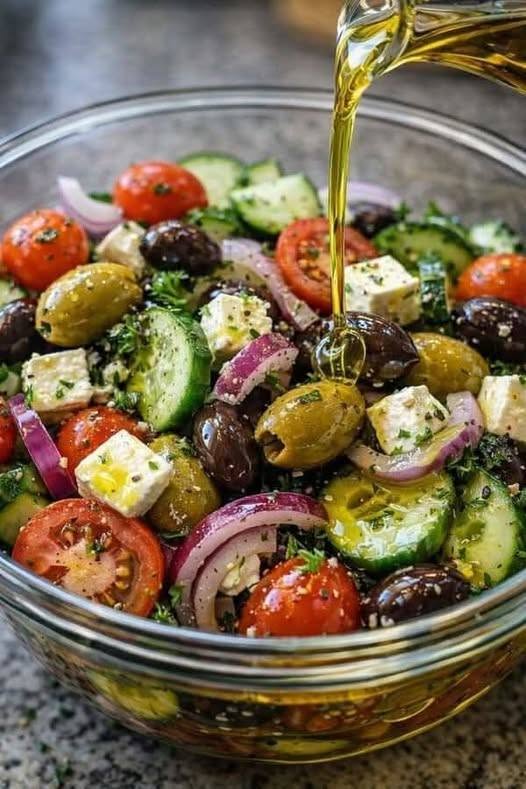
Classic Greek Salad
Description
Classic Greek Salad, also known as Horiatiki, is a fresh Mediterranean salad made with juicy tomatoes, crisp cucumber, red onion, bell pepper, Kalamata olives, and creamy feta cheese. A simple dressing of extra-virgin olive oil, red wine vinegar, oregano, salt, and pepper brings everything together.
Servings
4 servings
Prep time: 15 minutes
Cook time: 0 minutes
Total time: 15 minutes
Ingredients
For the Salad
- 4 medium ripe tomatoes, cut into wedges
- 1 large cucumber, sliced into thick half-moons
- 1 small red onion, thinly sliced
- 1 green bell pepper, sliced
- ½ cup Kalamata olives
- 150 g (5 oz) feta cheese, cut into cubes or kept in one large slab
- 1 teaspoon dried oregano
For the Dressing
- ¼ cup extra-virgin olive oil
- 2 tablespoons red wine vinegar
- 1 teaspoon dried oregano
- ½ teaspoon salt, or to taste
- ¼ teaspoon freshly ground black pepper
- 1 small garlic clove, finely minced — optional
Instructions
- Prepare the vegetables: Wash and dry the tomatoes, cucumber, bell pepper, and onion. Cut the tomatoes into wedges and the cucumber into thick slices.
- Combine the vegetables: Place tomatoes, cucumber, red onion, and bell pepper in a large serving bowl.
- Add olives and feta: Add the Kalamata olives. Place the feta over the vegetables rather than aggressively mixing it, if you want a more traditional presentation.
- Make the dressing: Whisk together olive oil, red wine vinegar, oregano, salt, pepper, and optional garlic.
- Dress the salad: Drizzle the dressing over the salad.
- Finish: Sprinkle with oregano and gently toss, or leave the feta on top and spoon some dressing over it.
- Serve: Serve immediately or allow it to sit for about 5–10 minutes so the flavors can mingle.
Recipe Notes
- Use ripe, flavorful tomatoes because they provide much of the salad’s flavor.
- Traditional Greek salad generally doesn’t require lettuce.
- Authentic versions often feature a large piece of feta rather than finely crumbled feta.
- Kalamata olives give the salad its characteristic Mediterranean flavor.
- For the best texture, cut the vegetables fairly large rather than chopping them finely.
- If making the salad ahead, keep the dressing separate until shortly before serving.
Tips for the Best Greek Salad
Choose good olive oil: Extra-virgin olive oil makes a noticeable difference in a simple salad.
Don’t over-dress: Start with some dressing and add more according to taste.
Salt carefully: Feta and olives are already salty, so taste before adding additional salt.
Let it rest briefly: A few minutes at room temperature allows the tomato juices, olive oil, vinegar, and oregano to combine.
Serve fresh: Greek salad is at its best when the vegetables remain crisp and juicy.
Optional Variations
- Add sliced pepperoncini for a tangy kick.
- Add fresh parsley or mint for extra freshness.
- Use cherry tomatoes when ripe fresh tomatoes aren’t available.
- Add a little lemon juice for a brighter dressing.
- Serve with warm pita bread for a more substantial meal.
Approximate Nutritional Information
Per serving, assuming 4 servings and the listed ingredients.
| Nutrient | Approx. Amount |
|---|---|
| Calories | 300 kcal |
| Protein | 8 g |
| Carbohydrates | 12 g |
| Fat | 26 g |
| Fiber | 4 g |
| Sugar | 6 g |
| Sodium | 700 mg |
Nutrition varies depending on the size of the vegetables, amount of feta/olives, and exact brands used.
Benefits
- Vegetable-rich: Tomatoes, cucumber, onion, and bell pepper contribute vitamins, minerals, antioxidants, and fiber.
- Healthy fats: Extra-virgin olive oil provides predominantly monounsaturated fat.
- Protein and calcium: Feta contributes protein and calcium.
- Antioxidants: Tomatoes and other colorful vegetables provide antioxidant compounds.
- Hydrating: The vegetables contain a high amount of water, making the salad refreshing.
- Mediterranean-style: The combination of vegetables, olive oil, olives, and moderate amounts of cheese fits well into a Mediterranean-style eating pattern.
Frequently Asked Questions
Q: Is Greek salad traditionally made with lettuce?
A: Classic Horiatiki generally does not contain lettuce. It focuses on tomatoes, cucumber, onion, peppers, olives, and feta.
Q: Can I make Greek salad ahead of time?
A: Yes. Prepare and refrigerate the vegetables, but ideally add the dressing shortly before serving to preserve the vegetables’ texture.
Q: Can I use feta cheese crumbles?
A: Yes. Crumbled feta works well, although a larger piece of feta gives a more traditional appearance.
Q: What olives are best for Greek salad?
A: Kalamata olives are the classic choice, but other good-quality Greek olives can also be used.
Q: Can I make it without feta?
A: Absolutely. Simply omit the feta for a dairy-free salad.
Q: How long does Greek salad last in the refrigerator?
A: For the best texture, eat it within about 1–2 days. If possible, store the dressing separately.
Q: What can I serve with Greek salad?
A: It pairs particularly well with grilled chicken, fish, lamb, roasted vegetables, pita bread, hummus, or other Mediterranean dishes.
Q: Can I use lemon juice instead of vinegar?
A: Yes. Lemon juice makes a delicious, brighter dressing, although red wine vinegar is a classic choice.
Chef’s Note
For the most flavorful result, don’t overcomplicate it. Excellent ripe tomatoes, crisp cucumber, good Kalamata olives, quality feta, oregano, and extra-virgin olive oil are what make a classic Greek salad special.