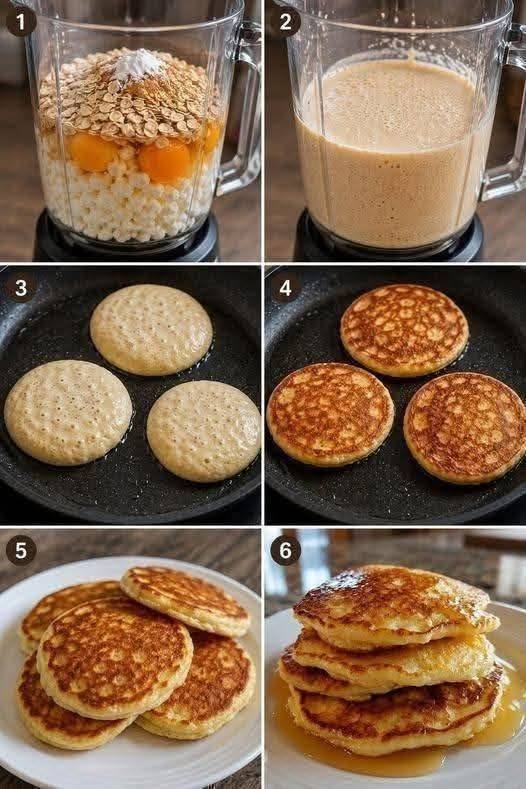
🥞 Oatmeal Cottage Cheese Pancakes
Description
These Oatmeal Cottage Cheese Pancakes are soft, fluffy, protein-rich, and naturally satisfying. Blending oats with cottage cheese creates a creamy batter with a tender texture, while eggs provide structure and extra protein. They make a great breakfast or post-workout meal and can be served with fresh fruit, yogurt, nut butter, or a light drizzle of maple syrup.
Servings
Serves: 2
Makes: 6–8 medium pancakes
Prep time: 10 minutes
Cook time: 15 minutes
Total time: 25 minutes
Ingredients
- 1 cup rolled oats
- 1 cup cottage cheese
- 2 large eggs
- 1/2 teaspoon baking powder
- 1 teaspoon vanilla extract
- 1/2 teaspoon cinnamon
- 1–2 teaspoons honey or maple syrup, optional
- Pinch of salt
- 2–4 tablespoons milk, as needed
- 1 teaspoon cooking oil or butter, for the pan
Instructions
- Blend the batter: Add rolled oats, cottage cheese, eggs, baking powder, vanilla, cinnamon, salt, and optional honey or maple syrup to a blender. Blend until mostly smooth.
- Adjust consistency: Let the batter rest for 3–5 minutes. Oats will absorb some liquid. If the batter becomes too thick, add milk 1 tablespoon at a time.
- Heat the pan: Place a nonstick skillet or griddle over medium-low to medium heat and lightly grease it.
- Cook: Pour about 1/4 cup of batter for each pancake. Cook for approximately 2–3 minutes, until bubbles appear and the edges look set.
- Flip: Carefully flip and cook for another 1–2 minutes until golden and cooked through.
- Repeat: Continue with the remaining batter, lightly greasing the pan as needed.
- Serve: Enjoy warm with berries, banana slices, Greek yogurt, nut butter, or your favorite pancake topping.
Recipe Notes
- Cottage cheese: Full-fat, low-fat, or reduced-fat cottage cheese can be used.
- Texture: Blending thoroughly gives smoother pancakes. For a more rustic texture, blend less.
- Sweetness: The pancakes are only lightly sweet without honey or maple syrup, so adjust according to your preferred toppings.
- Batter thickness: Different cottage cheese brands contain different amounts of moisture, so the amount of milk may vary.
- Gluten-free: Use certified gluten-free oats if required.
- Make ahead: Cooked pancakes can be refrigerated for about 3–4 days or frozen for longer storage.
Tips for Perfect Pancakes
- Don’t use high heat. These pancakes can brown quickly, so medium-low heat works best.
- Let the batter rest. A few minutes allows the oats to hydrate and improves the texture.
- Don’t overcrowd the pan. Leave enough space to flip each pancake comfortably.
- Wait before flipping. Flip only when bubbles form and the edges begin to look set.
- Use a blender. This produces a smoother, more traditional pancake texture.
- Keep finished pancakes warm. Place them on a plate covered loosely with foil while cooking the remaining batches.
Serving Ideas
Try topping them with:
- Fresh strawberries, blueberries, or raspberries
- Sliced banana
- Greek yogurt
- Peanut or almond butter
- Chopped nuts
- Chia or flax seeds
- A small drizzle of maple syrup
- Cinnamon and fresh fruit
Approximate Nutritional Information
Per serving (½ of recipe, without toppings):
| Nutrient | Approx. Amount |
|---|---|
| Calories | 390 kcal |
| Protein | 27 g |
| Carbohydrates | 39 g |
| Fat | 14 g |
| Fiber | 5 g |
| Sugar | 5 g |
| Sodium | 600 mg |
Nutrition is an estimate and varies according to the cottage cheese, oats, milk, cooking fat, and optional sweetener used.
Potential Benefits
- Protein-rich: Cottage cheese and eggs provide substantial protein, which contributes to muscle maintenance and satiety.
- Good source of fiber: Oats contribute soluble and insoluble fiber, which can support digestive health.
- Satisfying breakfast: The combination of protein, carbohydrates, and fat can make the meal more filling.
- Whole-grain carbohydrates: Rolled oats provide complex carbohydrates and several micronutrients.
- Versatile: The recipe can easily be adapted with fruit, spices, or different toppings.
Frequently Asked Questions
Q: Can I make these pancakes without a blender?
Yes. You can use oat flour instead of whole rolled oats and whisk everything together by hand. The texture will be slightly different but still delicious.
Q: Can I use Greek yogurt instead of cottage cheese?
Yes, although the texture and nutritional profile will change. You may need to adjust the amount of milk to achieve a pourable batter.
Q: Why are my pancakes too wet inside?
The heat may be too high, causing the outside to brown before the center cooks. Reduce the heat and make slightly smaller pancakes.
Q: Can I make the batter ahead of time?
Yes, but the oats will continue absorbing liquid, making the batter thicker. Add a little milk before cooking if necessary.
Q: Can I freeze these pancakes?
Absolutely. Cool them completely, place parchment between pancakes, and store them in an airtight freezer-safe container or bag.
Q: How do I reheat frozen pancakes?
Reheat them in a toaster, toaster oven, microwave, or skillet until heated through.
Q: Are these pancakes gluten-free?
They can be. Use oats specifically labeled certified gluten-free to avoid potential cross-contamination.
Q: Can I make them sweeter?
Yes. Add honey, maple syrup, mashed banana, or a little extra vanilla and cinnamon to the batter.
Q: What is the best cottage cheese to use?
Any variety works. For a richer pancake, use full-fat cottage cheese; for a lighter version, use low-fat or reduced-fat cottage cheese.