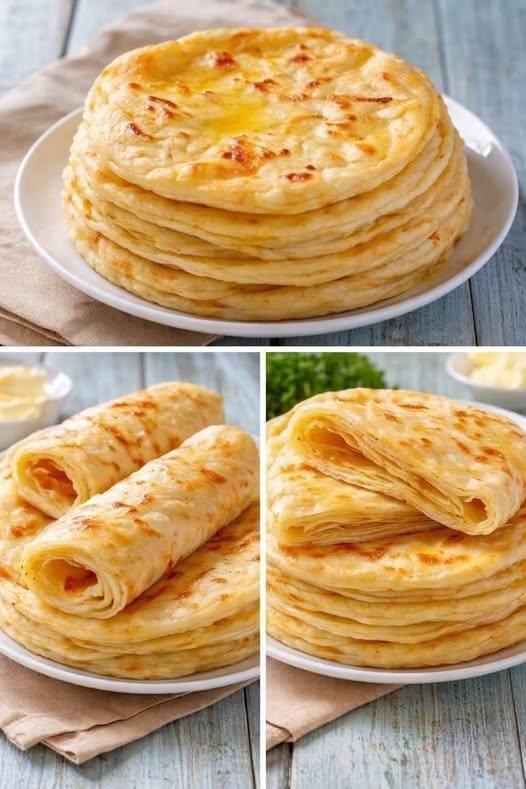
Crispy Layered Paratha
Description
Crispy Layered Paratha is a delicious, flaky Indian/Pakistani flatbread made from a simple wheat-flour dough. The dough is rolled, layered with oil or ghee, folded, and cooked on a hot tawa until beautifully golden and crisp on the outside while remaining soft and flaky inside. It makes a wonderful breakfast, lunch, or dinner served with yogurt, pickle, chutney, curry, or tea.
Ingredients
For the Dough
- 2 cups whole wheat flour (atta)
- ½ teaspoon salt
- 1 teaspoon sugar, optional
- 1 tablespoon oil or melted ghee
- ¾ cup water, approximately
- 1–2 tablespoons extra flour for dusting
For the Layers
- 3–4 tablespoons ghee or cooking oil
- 2–3 tablespoons dry flour
- Extra ghee or oil for cooking
Instructions
1. Make the Dough
- Add whole wheat flour, salt, and sugar to a large mixing bowl.
- Add 1 tablespoon oil or melted ghee.
- Gradually add water and knead into a smooth, soft dough.
- Knead for about 5–7 minutes until the dough becomes elastic and smooth.
- Cover and let it rest for 20–30 minutes.
2. Prepare the Layering
- Divide the dough into 6–8 equal portions.
- Roll one portion into a thin circle using a little dry flour.
- Spread a thin layer of ghee or oil over the surface.
- Lightly sprinkle dry flour over the greased surface.
- Fold the dough into pleats or roll it into a spiral to create multiple layers.
- Tuck the end underneath and gently flatten.
- Repeat with the remaining dough portions.
- Allow the prepared portions to rest for another 5–10 minutes.
3. Roll the Paratha
- Take one layered dough portion.
- Dust lightly with flour.
- Gently roll it into a round or slightly oval paratha.
- Avoid pressing too hard, as excessive pressure can flatten the layers.
4. Cook the Paratha
- Heat a tawa or flat skillet over medium-high heat.
- Place the rolled paratha on the hot tawa.
- Cook until small bubbles appear and the underside develops light golden spots.
- Flip and spread a little ghee or oil over the cooked side.
- Flip again and apply ghee or oil to the other side.
- Cook while gently pressing and rotating the paratha until both sides are golden brown, crisp, and flaky.
- Remove from the tawa and gently crush the edges between your hands to separate the layers.
5. Serve
Serve hot with:
- Plain yogurt or raita
- Mango or mixed pickle
- Mint chutney
- Chana or chickpea curry
- Aloo curry
- Dal
- Fried or scrambled eggs
- A cup of hot tea
Recipe Notes
- A soft dough gives a softer and flakier paratha.
- Resting the dough is important because it relaxes the gluten and makes rolling easier.
- Ghee gives the paratha a richer flavor and more fragrant layers, while oil produces a lighter result.
- Sprinkle only a small amount of flour between the layers; too much can make the paratha dry.
- Cook over medium to medium-high heat. Excessively high heat can burn the outside before the inside cooks properly.
- For the crispiest result, cook until both sides have distinct golden-brown patches.
Tips for Extra Crispy Layers
- Don’t skip the resting time: It makes the dough easier to roll and helps maintain the layers.
- Use enough fat: A thin, even coating of ghee or oil helps separate the layers.
- Don’t over-roll: Roll gently after creating the layers.
- Preheat the tawa properly: A hot tawa helps create a crisp exterior.
- Avoid overcrowding: Cook one paratha at a time for better heat control.
- Press gently while cooking: Light pressure helps cook the layers evenly without destroying them.
- Fluff after cooking: Gently clap the hot paratha between your hands to separate and reveal the flaky layers.
Servings
6–8 parathas
Preparation time: 15 minutes
Dough resting time: 20–30 minutes
Cooking time: 20–25 minutes
Total time: Approximately 55–70 minutes
Nutritional Information
Approximate values per paratha, assuming 8 parathas and moderate use of oil/ghee.
- Calories: 180–220 kcal
- Carbohydrates: 28–32 g
- Protein: 5–6 g
- Fat: 6–9 g
- Fiber: 3–4 g
- Sodium: 150–250 mg
Actual nutrition will vary depending on the amount and type of flour, ghee, or oil used.
Benefits
- Provides energy: Wheat flour supplies carbohydrates that can fuel daily activities.
- Good source of fiber: Whole wheat flour provides dietary fiber that supports healthy digestion.
- Provides plant protein: Wheat contributes a modest amount of protein.
- Contains essential nutrients: Whole wheat provides nutrients such as iron, magnesium, and several B vitamins.
- Versatile meal option: It can be paired with protein-rich foods such as yogurt, eggs, lentils, or chickpeas to make a more balanced meal.
- Homemade advantage: Making paratha at home allows you to control the amount of salt and cooking fat.
Frequently Asked Questions
1. Why is my paratha not crispy?
The tawa may not be hot enough, or the paratha may contain too much moisture. Make sure the tawa is properly heated and cook the paratha until both sides are golden and crisp.
2. Can I make layered paratha without ghee?
Yes. You can use vegetable oil or another suitable cooking oil. Ghee generally gives a richer taste and aroma.
3. Can I use all-purpose flour instead of wheat flour?
Yes. All-purpose flour can produce a softer and more flaky paratha, although whole wheat flour provides more fiber.
4. Why are my layers disappearing?
The dough may have been rolled too aggressively after layering. Roll gently and avoid pressing down heavily.
5. Can I prepare the dough in advance?
Yes. The dough can be prepared ahead and refrigerated in an airtight container. Bring it closer to room temperature before rolling.
6. Can I freeze layered parathas?
Yes. Roll and partially cook the parathas, allow them to cool, separate them with parchment or food-safe sheets, and freeze them in an airtight freezer bag or container. Cook from frozen when needed.
7. How do I keep parathas crispy after cooking?
Place cooked parathas on a wire rack for a few minutes rather than stacking them immediately. This allows steam to escape and helps preserve crispness.
8. What is the best fat for crispy paratha?
Ghee is excellent for flavor and flaky layers, while cooking oil can also produce a crisp texture. A combination of ghee and oil works well too.
9. Can I add spices to the paratha?
Yes. Add crushed cumin, black pepper, chili flakes, dried fenugreek leaves, or fresh coriander between the layers for extra flavor.
10. What should I serve with crispy layered paratha?
It pairs especially well with yogurt, pickle, chutney, eggs, chickpea curry, lentils, potato curry, or any flavorful gravy.
Chef’s Tip
For exceptionally flaky paratha, make sure the dough is soft but not sticky, spread the ghee evenly, create several folds, and roll the layered dough gently. The combination of proper resting, controlled heat, and enough fat is the secret to beautifully crispy layers.