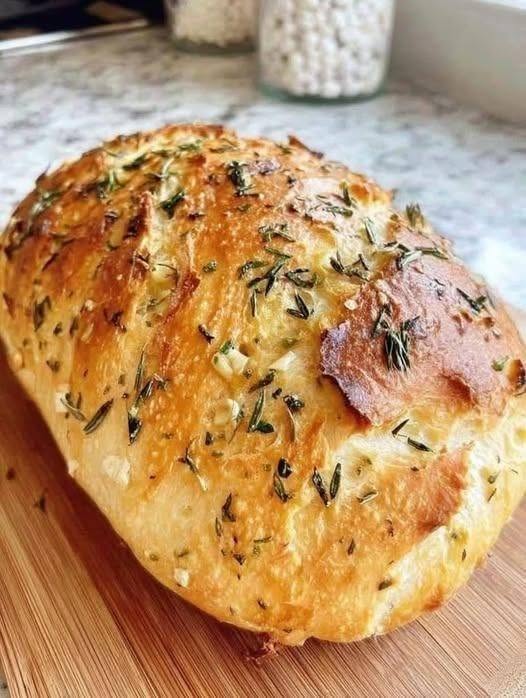
Easy No-Knead Herb Bread (No Eggs, No Butter)
Based on the image, this appears to be a rustic no-knead white bread topped with herbs and coarse salt. Since a photo alone can’t confirm the exact recipe, the recipe below is a homemade version that closely matches the loaf shown.
Description
If you’ve ever wanted to bake fresh bread without a bread machine, mixer, or complicated techniques, this Easy No-Knead Herb Bread is the perfect recipe. Made with just a handful of pantry staples, it requires no kneading, no eggs, and no butter, yet produces a loaf with a golden, crispy crust and a soft, fluffy interior.
The secret is a simple, high-hydration dough that rises on its own, allowing gluten to develop naturally. This method creates bakery-style bread with very little effort, making it ideal for beginners and experienced bakers alike.
This versatile loaf is delicious served warm with soup, toasted for breakfast, made into sandwiches, or enjoyed alongside pasta, salads, and grilled dishes. A sprinkle of dried herbs and coarse sea salt gives it a rustic appearance and wonderful aroma, just like artisan bakery bread.
Affordable, satisfying, and easy to prepare, this recipe is likely to become a staple in your kitchen.
Ingredients
For the Bread
3 cups (375 g) all-purpose or strong bread flour
1 teaspoon salt
1 teaspoon instant yeast
1¼ cups (300 ml) warm water
1 tablespoon olive oil (optional, for a softer crumb)
Herb Topping
1 tablespoon olive oil
1 teaspoon dried rosemary
1 teaspoon dried thyme
½ teaspoon garlic powder (optional)
½ teaspoon coarse sea salt
Instructions
Step 1: Mix the Dough
In a large mixing bowl, combine the flour, salt, and instant yeast. Add the warm water (and olive oil, if using) and stir with a wooden spoon until a sticky dough forms. Do not knead.
Step 2: First Rise
Cover the bowl with plastic wrap or a clean kitchen towel. Leave the dough in a warm place for 1½–2 hours, or until doubled in size.
Step 3: Shape the Dough
Lightly flour your work surface. Gently scrape the dough onto the surface and fold the edges toward the centre a few times to form a rough loaf. Avoid overworking the dough.
Transfer the loaf to a baking tray lined with parchment paper or place it in a lightly greased loaf tin.
Step 4: Second Rise
Cover loosely and let the dough rest for 30–40 minutes while the oven preheats.
Step 5: Prepare the Topping
Brush the loaf with olive oil and sprinkle evenly with rosemary, thyme, garlic powder, and coarse sea salt. Use a sharp knife to score the top with a few shallow slashes.
Step 6: Bake
Preheat the oven to 220°C (425°F).
Bake for 30–35 minutes, or until the loaf is deep golden brown and sounds hollow when tapped on the bottom.
Step 7: Cool
Transfer the bread to a wire rack and allow it to cool for at least 20 minutes before slicing.
Preparation Time
Prep Time: 10 minutes
First Rise: 1½–2 hours
Second Rise: 30–40 minutes
Bake Time: 30–35 minutes
Total Time: Approximately 3 hours
Servings
Makes 1 loaf
Approximately 10 slices
Nutritional Information (Approximate Per Slice)
Calories: 155
Protein: 5 g
Carbohydrates: 30 g
Fat: 2 g
Saturated Fat: 0.3 g
Fibre: 1.5 g
Sugar: 0.5 g
Sodium: 240 mg
Nutrition will vary depending on the flour used and whether olive oil is included.
Health Benefits
Lower in Saturated Fat
Because this bread contains no butter, it is naturally lower in saturated fat than many enriched breads.
Egg-Free
Suitable for people with egg allergies or those following an egg-free diet.
Simple Ingredients
Made with basic pantry staples and no unnecessary additives or preservatives.
Good Source of Energy
The carbohydrates provide sustained energy, making this bread a satisfying accompaniment to meals.
Customisable
You can use wholemeal flour, seeds, herbs, or spices to increase fibre and flavour.
Budget-Friendly
Homemade bread is often much more economical than artisan bakery loaves.
Recipe Notes
Bread flour creates a slightly chewier texture, while all-purpose flour makes a softer loaf.
The dough should be sticky—avoid adding too much extra flour.
Rising times may vary depending on the temperature of your kitchen.
Fresh herbs can be used instead of dried herbs; use about three times the amount.
Let the loaf cool before slicing to help the crumb set properly.
Helpful Tips
Measure flour accurately using a kitchen scale for consistent results.
If your kitchen is cool, let the dough rise inside the oven with the light on (oven switched off).
Place a shallow pan of hot water on the bottom rack of the oven during baking to encourage a crisp crust.
Use parchment paper to prevent sticking.
For extra flavour, mix grated Parmesan, shredded cheddar, or roasted garlic into the dough.
Brush the loaf with olive oil immediately after baking for a softer crust.
Store bread in a paper bag or bread box to maintain the crust.
Variations
Wholemeal Bread
Replace half the white flour with wholemeal flour.
Garlic Herb Bread
Add two cloves of finely minced garlic to the dough.
Cheese Bread
Fold in 1 cup grated cheddar or mozzarella before the first rise.
Seeded Bread
Sprinkle sesame, sunflower, pumpkin, or flax seeds over the loaf before baking.
Italian Herb Bread
Use oregano, basil, rosemary, and thyme together for a Mediterranean flavour.
Olive Bread
Fold sliced black or green olives into the dough.
Jalapeño Bread
Add chopped jalapeños and grated cheese for a spicy variation.
Cinnamon Raisin Bread
Omit the herbs and add raisins with cinnamon for a sweet breakfast loaf.
Storage
Room Temperature
Store in an airtight container or bread bag for up to 3 days.
Refrigerator
Not recommended, as refrigeration can dry out bread more quickly.
Freezer
Wrap tightly in plastic wrap and foil, then freeze for up to 3 months. Thaw at room temperature and refresh in a warm oven if desired.
Serving Suggestions
This bread pairs beautifully with:
Soups and stews
Pasta dishes
Fresh salads
Sandwiches
Toast with avocado
Jam or honey
Olive oil and balsamic vinegar
Garlic butter (if not avoiding dairy)
Cheese boards
Frequently Asked Questions
1. Do I really not need to knead the dough?
Correct. Time and hydration allow the gluten to develop naturally, creating a tender, airy loaf without kneading.
2. Can I use active dry yeast instead of instant yeast?
Yes. Dissolve the active dry yeast in the warm water and let it stand for 5–10 minutes until foamy before mixing with the dry ingredients.
3. Can I make this bread without olive oil?
Yes. The olive oil is optional and mainly contributes to a softer crumb and added flavour.
4. Why is my dough so sticky?
A sticky dough is expected with no-knead bread. Resist the temptation to add too much flour, as this can make the loaf dense.
5. Can I use wholemeal flour only?
Yes, but a loaf made with 100% wholemeal flour will be denser. Mixing wholemeal and white flour usually gives a lighter texture.
6. Can I bake this in a Dutch oven?
Absolutely. A preheated Dutch oven traps steam and helps produce an especially crisp, artisan-style crust.
7. How do I know when the bread is done?
The crust should be deep golden, and the loaf should sound hollow when tapped on the bottom. An internal temperature of about 93–96°C (200–205°F) is another reliable indicator.
8. Can I add seeds or nuts?
Yes. Fold sunflower seeds, pumpkin seeds, flaxseeds, walnuts, or chopped pecans into the dough before the first rise.
9. Why did my bread not rise?
Possible causes include expired yeast, water that was too hot or too cold, or insufficient rising time in a cool environment.
10. Can I prepare the dough in advance?
Yes. After mixing, cover the dough and refrigerate it overnight. The slow rise develops a deeper flavour. Allow the dough to come closer to room temperature before shaping and baking.
Final Thoughts
This Easy No-Knead Herb Bread proves that homemade bread doesn’t have to be complicated or expensive. With just a few everyday ingredients and minimal hands-on effort, you can enjoy a fragrant loaf with a crisp crust and soft, airy interior. While the recipe is simple enough for beginners, it also offers endless opportunities for customisation with herbs, seeds, cheese, or whole grains. Whether you’re serving it with soup, making sandwiches, or enjoying a warm slice straight from the oven, this bread is a delicious reminder that fresh baking can be both affordable and rewarding.